The Last Rust: Archana Hande

According to Émile Durkheim, a totem is a reflection of a group's collective consciousness; it embodies the group's history, shared values, and perceived common ancestry. For the nation-state, these take the form of the national flag, a national bird, or a national animal. These represent symbols around which we structure a value system. However, they are not merely emblems of identity but tools for social regulation and the distribution of power. For Archana Hande, these symbols need to be reclaimed from the ground up.
The Last Rust was born out of her visits to Gujari markets—flea markets that operate as nomadic Sunday bazaars traveling all over India. Selling only scrap, these markets are surrounded by a world within a world: a conglomeration housing community kitchens, wrestlers' dens, garment units, massage centres, jacquard weavers, and more. The Gujari Market is a hub for the scrap discarded even by main-street sellers, creating a second life for this now third-hand material.
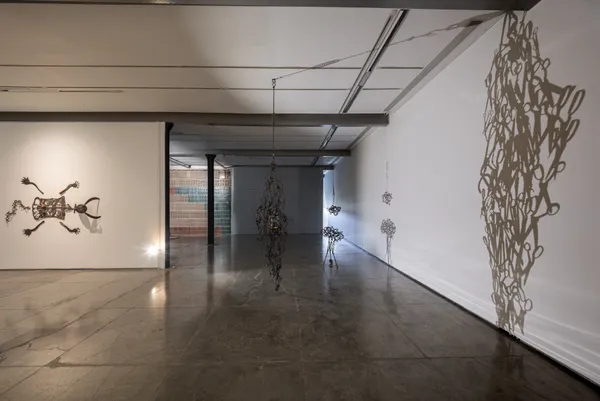
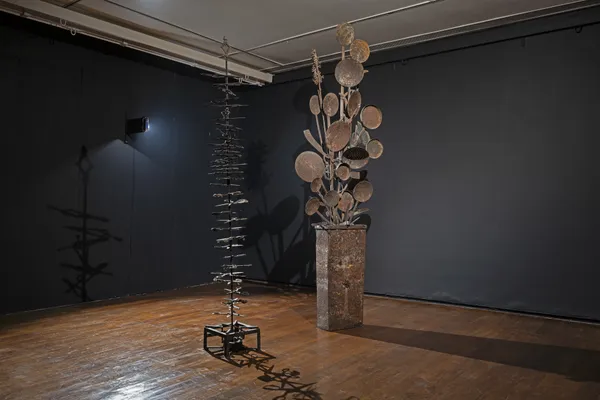
Hande reassembles this detritus to create a museum of totemic symbols. Here, once-discarded sickles, dumbbells, sieves, scissors, and knives are brought together to form emblems, insignias, and towers. These monuments subvert symbolic expectations by evoking skeletons, corpses, and carapaces—decomposing and mutating. Each object within the assembly carries its own class, gender, and caste history, embedded within the lives of those existing on the margins of society. Through this, the ideological proximity of the national monument to power is dislocated; these monuments instead evoke the "Other."
In this way, The Last Rust is both a paean to a world that is quickly disappearing and an embodiment of hope—a possibility where a new future can be assembled out of discarded scraps as a defense against despair.
Rohan Shivkumar, 2026